As you might suspect, Hyperthyroidism is the opposite of Hypothyroidism. It is a condition where the thyroid kicks into overdrive and makes TOO much thyroid hormone.
Common symptoms include:
- Rapid heart rate (tachycardia)
- Heart palpitations (pounding or irregular heartbeat)
- Increased blood pressure
- Unexplained weight loss despite an increased appetite
- Excessive sweating
- A heightened sensitivity to heat.
- More frequent bowel movements or diarrhea.
- Hand tremors (shakiness)
- Muscle weakness—especially in the upper arms and thighs
- Feeling physically restless or hyperactive.
- Hair loss or brittle hair
- Thinning skin
- Warm, moist, or clammy skin.
- Feeling nervous, anxious, or irritable, often accompanied by mood swings.
- Difficulty concentrating and forgetfulness.
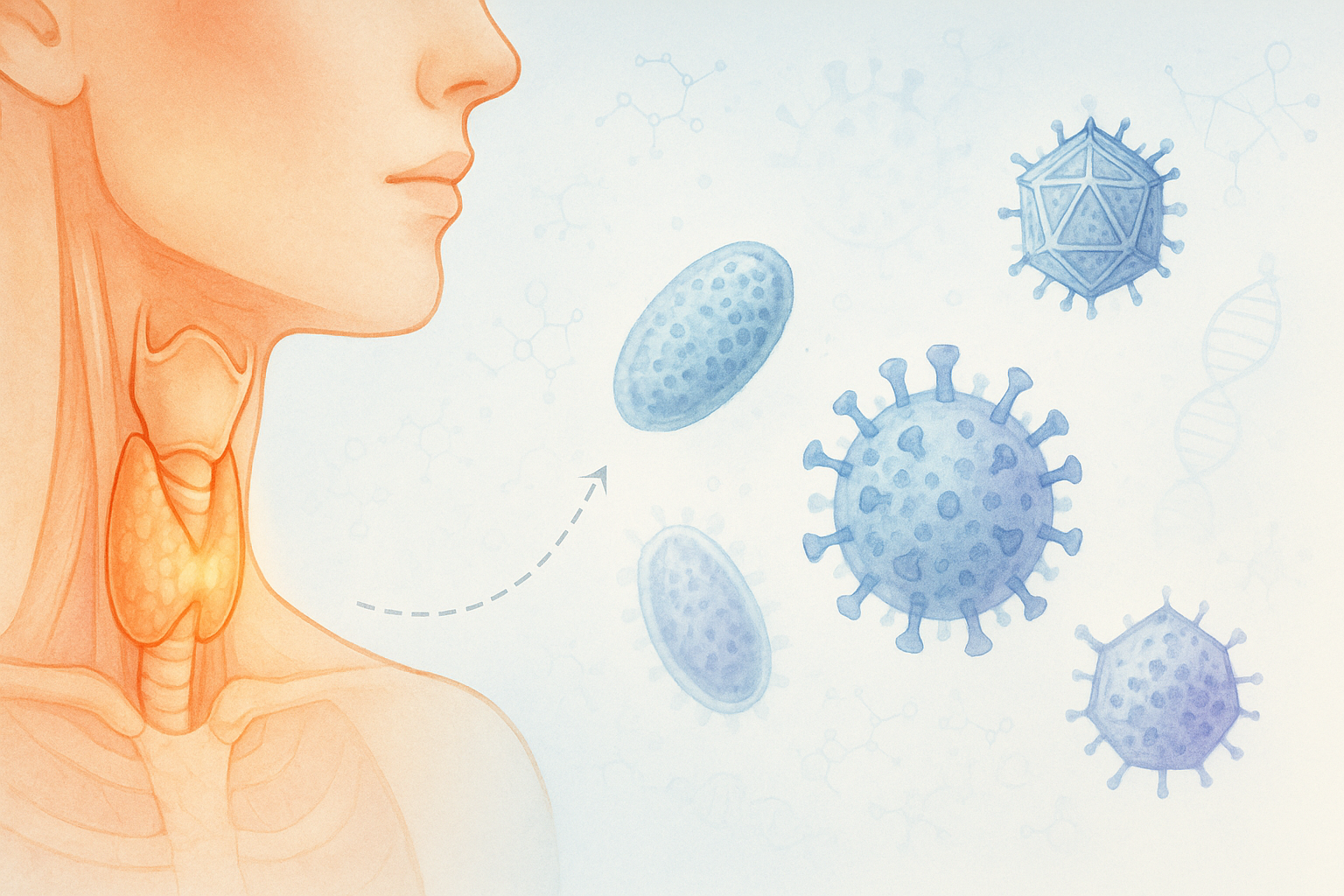
When you are exposed to certain viruses like Mumps, Flu, or Viral pneumonia, this can lead to an autoimmune condition where not only is your immune system overreacting, but so is your thyroid!
One of those examples is Graves’ disease. There is a 70% genetic component to this condition and the other 30% are external factors, especially infection. In this case, your immune system undergoes a fundamental shift in perception, leading it to produce a specific type of antibody that creates a state of chronic overactivity in your thyroid gland.
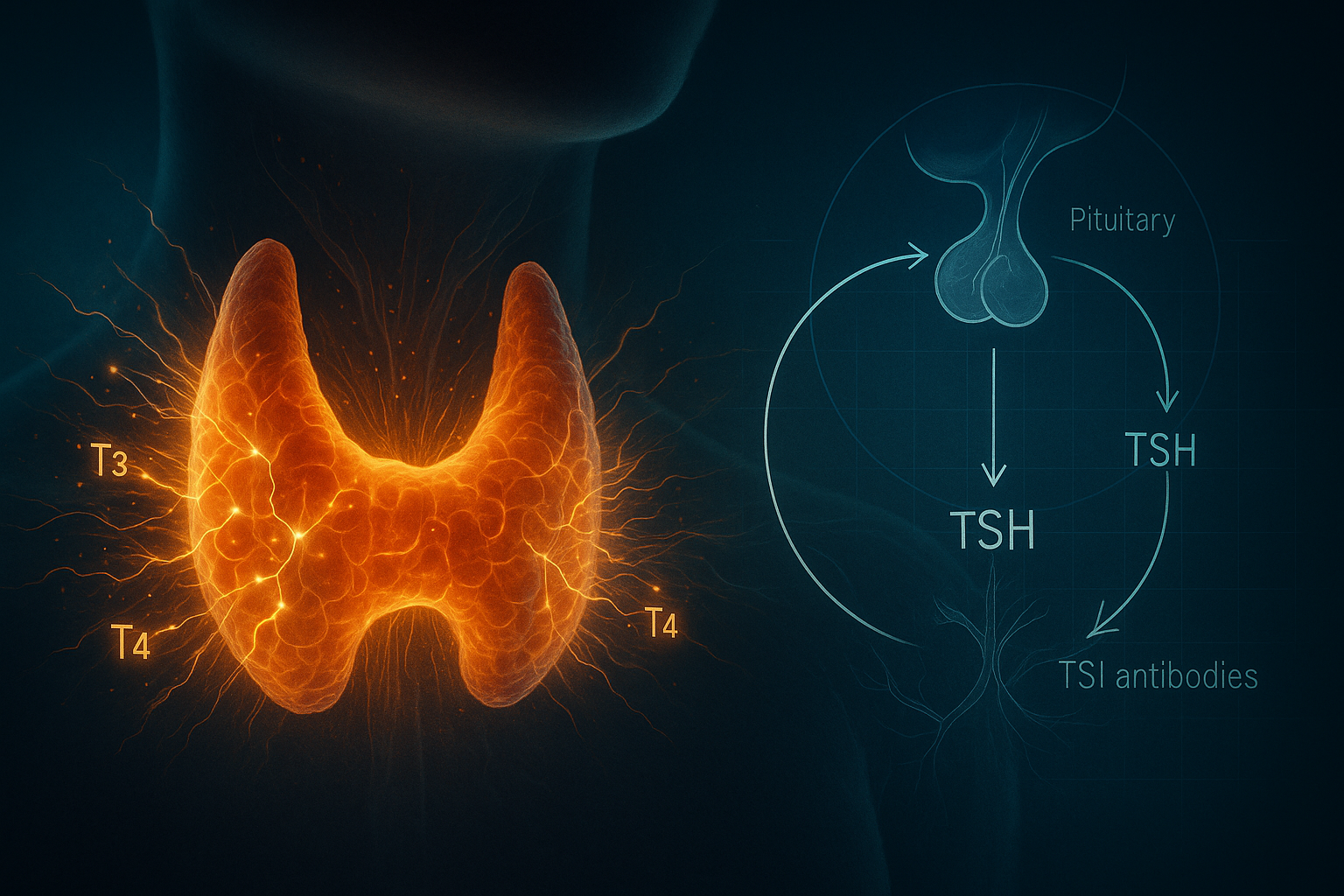
In a healthy system, your pituitary gland releases Thyroid-Stimulating Hormone (TSH) to tell your thyroid exactly when to produce energy-regulating hormones.
However, in Graves’ disease, your body mistakenly generates Thyroid-Stimulating Immunoglobulins (TSI). These autoantibodies are shaped so similarly to TSH that they fit perfectly into the receptors on the surface of your thyroid cells. When these "mimic" antibodies bind to those receptors, they act like a key stuck in an ignition, permanently turning your thyroid to the "on" position regardless of what your body actually needs.
As a result of this constant stimulation, you enter a state of hyperthyroidism, where your thyroid gland often physically enlarges—a condition known as a goiter—to keep up with the perceived demand for more hormones. Because your gland is now pumping out excessive amounts of thyroxine (T4) and triiodothyronine (T3), your entire metabolism is forced into overdrive.
When you are diagnosed with a toxic Nodular Goiter, you are essentially dealing with a thyroid gland that has gone "rogue." Over time, your thyroid has developed lumps, or nodules, that have become autonomous—meaning they no longer listen to your body’s regulatory signals. While a healthy thyroid only produces hormones when prompted by your brain, these specific lumps pump out excessive amounts of thyroid hormone regardless of what your body actually needs. This leads you into a state of hyperthyroidism, where your metabolism is forced into overdrive. You might feel your heart racing, notice your hands shaking, or find yourself losing weight despite eating normally. These "hot nodules" act like independent factories within your neck, and because they don't shut off, they can leave you feeling physically exhausted, anxious, and heat-intolerant.
The link between these overactive lumps and iodine deficiency is rooted in your gland’s long-term survival strategy. If you haven't had enough iodine in your diet over many years, your thyroid has to work much harder to capture every available molecule to make hormones. To compensate for this deficiency, the gland often grows larger, forming a "simple" goiter. As the cells in your thyroid constantly strain and divide to keep up with demand, the risk of genetic mutations increases. Eventually, some of these cells may mutate in a way that flips their "on" switch permanently. This transformation from a stagnant, enlarged gland into a toxic multinodular goiter—also known as Plummer’s Disease—is a slow process that often takes decades to manifest.
Here’s a final example of hyperthyroidism: when you experience a sudden onset of thyroid pain and symptoms of an overactive metabolism, means you may be dealing with De Quervain’s Thyroiditis (also known as subacute granulomatous thyroiditis). Unlike permanent autoimmune conditions, this is a transient inflammatory state typically triggered by a viral respiratory infection. As your body attempts to clear the virus, the inflammatory process migrates to your thyroid gland, causing it to swell and become remarkably tender to the touch. This inflammation compromises the structural integrity of the thyroid follicles—the tiny "storage sacs" where your body keeps its supply of pre-formed thyroid hormones. The transition into hyperthyroidism occurs not because your thyroid is overproducing hormones, but because it is "leaking" them.
Do you hear that bell?
Listen carefully…..do you hear it?
That’s an alarm going off. An alarm to alert you that it’s time.
It’s time to finally figure out once and for all what’s going on with your thyroid and your overall health.
Understanding all of these mechanisms that I’ve discussed, and getting tested to see which of them are involved with your Hashimoto’s hypothyroidism, are critical.
- This requires comprehensive testing which your insurance doesn’t want to pay for.
- This requires an understanding of the testing and how to address these imbalances from a natural, diet & lifestyle perspective
- And finally, and this is important, this requires working with a Doctor who is not interested in masking the problem with a drug (levothyroxine, synthroid, armour thyroid, NP thyroid) because that’s what the insurance company says or what they’ll pay for.
Then for years, you might be on this medication that is “masking” the problem but not addressing the real cause(s).
And that’s where I come in.
I offer a free, 15-30 minute phone call consultation (a Discovery Call) to determine if you're a good fit for my office and to have any of your questions answered. From there we can discuss what tests you need (that your Doctor has ignored) and get some answers. Click here to take advantage of this offer - schedule that free call and start your journey to finally fixing your issue.
Don't suffer with thyroid problems / Hashimoto’s any longer. Let's find out what’s causing your hypothyroidism, and stop masking the problem - let's finally solve it!